Prayagraj is one of the oldest and most culturally rich cities in India. Known for its religious significance, education institutions, and administrative importance, the city has a unique demographic structure that reflects its history and modern growth. Understanding the demographic profile of Prayagraj City helps students, researchers, policymakers, and residents understand how the city is changing and what challenges and opportunities lie ahead.
This article presents a detailed demographic overview of Prayagraj City based on Census 2011 data with estimated projections for 2024. You will learn about population size, gender ratio, literacy levels, religion composition, population density, and housing conditions. This information gives a clear picture of how Prayagraj functions as an urban center and education hub in Uttar Pradesh.
Population Overview of Prayagraj City
Prayagraj City is part of the larger Prayagraj district, but the city population is much smaller and more concentrated. Many people confuse district population with city population, which leads to misinformation.
The total city population in 2011 was around 1,112,544, which is approximately 11.1 lakhs. The metropolitan population was about 1,212,395, or around 12.1 lakhs. Based on growth trends and urban expansion, the estimated city population in 2024 is around 15.5 to 16.5 lakhs.
This growth is driven by students, migrants, job seekers, and people shifting from rural areas to the city for better education and employment opportunities. Prayagraj is currently the 7th most populous city in Uttar Pradesh after Kanpur, Lucknow, Ghaziabad, Agra, Varanasi, and Meerut.
Actionable insight
Urban planning and infrastructure development must match this growing population to avoid congestion and housing shortages.
Gender Composition and Population Structure
Gender distribution is an important demographic indicator. In Prayagraj City, males slightly outnumber females, which is common in many Indian cities due to migration patterns.
In 2011 city data, males were approximately 600,000 or 54 percent of the population. Females were around 512,000 or 46 percent. Many male students and workers migrate to Prayagraj alone, which affects the gender balance.
The sex ratio in the city is around 853 females per 1000 males. The child sex ratio for ages 0 to 6 is about 869 girls per 1000 boys, which shows a slightly better balance among younger populations.
Actionable insight
Improving safety, housing, and employment opportunities for women can help attract more female residents and improve gender balance.
Literacy Rate and Education Profile
Prayagraj is often called an education hub of North India. It is home to institutions like the University of Allahabad, IIIT Allahabad, and many coaching centers.
The average literacy rate in Prayagraj City is 84.76 percent, which is significantly higher than the district average of 72.3 percent. Male literacy is around 88.37 percent, while female literacy is about 80.53 percent.
This high literacy rate reflects the presence of universities, colleges, schools, and a strong student population. Many students from Bihar, Madhya Pradesh, and Uttar Pradesh come to Prayagraj for competitive exam preparation.
Actionable insight
Expanding digital education and vocational training can further improve employment and skill development in the city.
Religious Demographics of Prayagraj City
Prayagraj has a diverse religious composition, especially in the urban core. Hinduism is the dominant religion, followed by Islam, Christianity, Sikhism, and Jainism.
The religious distribution in the city is approximately:
- Hindu population around 76.03 percent
- Muslim population around 21.94 percent
- Christian population around 0.68 percent
- Sikh population around 0.28 percent
- Jain population around 0.10 percent
- Others around 0.97 percent
Muslim communities are concentrated in old city areas like Chowk and Atala. The Christian population is historically linked to Civil Lines and missionary schools. Sikh and Jain populations are small but active in trade and business.
Actionable insight
Interfaith community programs and heritage tourism can promote cultural harmony and local economic growth.
Population Density and Urban Housing
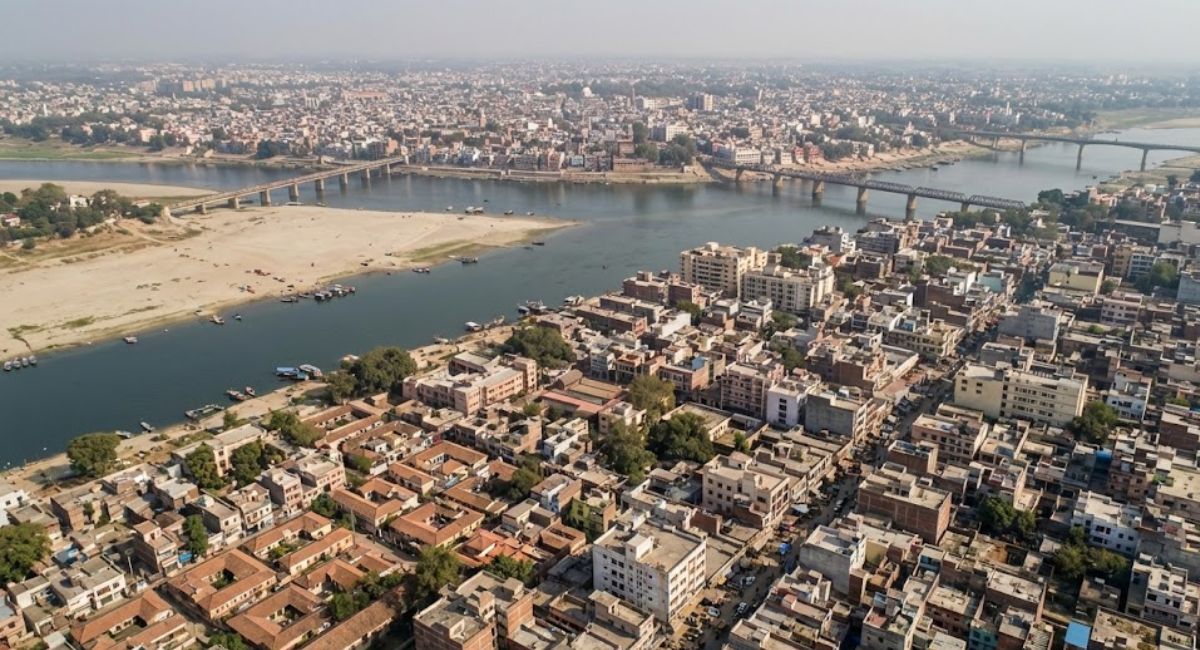
Prayagraj City is one of the densest urban centers in Uttar Pradesh. The population density is around 13,252 people per square kilometer. The old city areas have narrow lanes and high population concentration due to historical settlement patterns.
Approximately 30 percent of the city population lives in slum-designated areas such as parts of Naini, Phaphamau, and old city pockets. These areas face challenges like limited sanitation, water supply, and housing quality.
Urban expansion is happening towards Jhunsi, Naini, and outer areas, where new residential colonies and apartments are developing.
Actionable insight
Government and private developers should focus on affordable housing, slum rehabilitation, and smart city planning to improve living conditions.
Migration and Student Population Trends
Migration plays a major role in Prayagraj demographics. Thousands of students come every year for university education and competitive exam coaching. Migrant workers also come for government jobs, railways, and private sector opportunities.
Temporary populations increase significantly during Kumbh Mela, Magh Mela, and major festivals. These events bring millions of pilgrims, which affects city infrastructure and services.
Actionable insight
Seasonal population planning is necessary to manage traffic, sanitation, and healthcare during large events.
Age Structure and Youth Population
Prayagraj has a high youth population due to universities and coaching centers. A large portion of residents are between 18 and 35 years old. This young population contributes to the local economy, education sector, and services industry.
The presence of youth also drives demand for hostels, rental housing, cafes, libraries, and digital services.
Actionable insight
Youth entrepreneurship programs and startup incubators can help retain talent and create local jobs.
Economic and Occupational Demographics
The demographic profile of Prayagraj is closely linked to its economy. Major employment sectors include education, government services, trade, tourism, small businesses, and informal labor.
Civil Lines and commercial areas host offices, banks, and retail businesses. Old city areas focus on traditional trade and small shops. Naini industrial area contributes to manufacturing and logistics.
Actionable insight
Skill training and MSME support can improve income levels and reduce informal employment.
Urban Infrastructure and Demographic Pressure
Rapid population growth has increased pressure on roads, water supply, electricity, and healthcare. Traffic congestion and pollution are rising, especially in Civil Lines and old city areas.
Public transport, waste management, and digital governance need continuous improvement to support the growing population.
Actionable insight
Smart city initiatives should focus on sustainable transport, waste recycling, and digital citizen services.
Summary Table of Prayagraj City Demographics
Total Population: 11.12 lakhs in 2011
Estimated Population 2024: 15.5 to 16.5 lakhs
Literacy Rate: 84.76 percent
Male Literacy: 88.37 percent
Female Literacy: 80.53 percent
Sex Ratio: 853 females per 1000 males
Main Religion: Hindu 76 percent, Muslim 22 percent
FAQs About Demographic Profile of Prayagraj City
What is the population of Prayagraj City in 2024
The estimated population of Prayagraj City in 2024 is around 15.5 to 16.5 lakhs based on growth projections.
What is the literacy rate in Prayagraj City
The literacy rate in Prayagraj City is about 84.76 percent, which is higher than the district average.
Which religion has the highest population in Prayagraj
Hinduism is the majority religion in Prayagraj City, followed by Islam.
What is the sex ratio in Prayagraj City
The sex ratio is about 853 females per 1000 males in the city.
Why is Prayagraj population density high
Prayagraj has a historic compact city layout and high migration of students and workers, which increases population density.
Conclusion
The demographic profile of Prayagraj City shows a dynamic urban center shaped by education, religion, migration, and history. With a growing population, high literacy rate, and diverse communities, Prayagraj continues to be an important city in Uttar Pradesh. However, challenges like housing shortages, population density, and infrastructure pressure need attention. Understanding these demographic trends can help policymakers, residents, and investors plan for a better future of Prayagraj.

Maharshi Kushwaha is the founder of Prayagraj Portal, a digital platform dedicated to providing accurate news, city updates, culture, education, tourism, jobs, events, and essential services related to Prayagraj (Allahabad). Though he is not originally from Prayagraj, he frequently visits the city and works closely with a strong local team to ensure authentic and responsible reporting. A passionate digital creator and youth entrepreneur, he focuses on building meaningful platforms that promote information access, youth engagement, and community development. His vision is to make Prayagraj Portal one of the most trusted and impactful digital sources for everything related to Prayagraj.