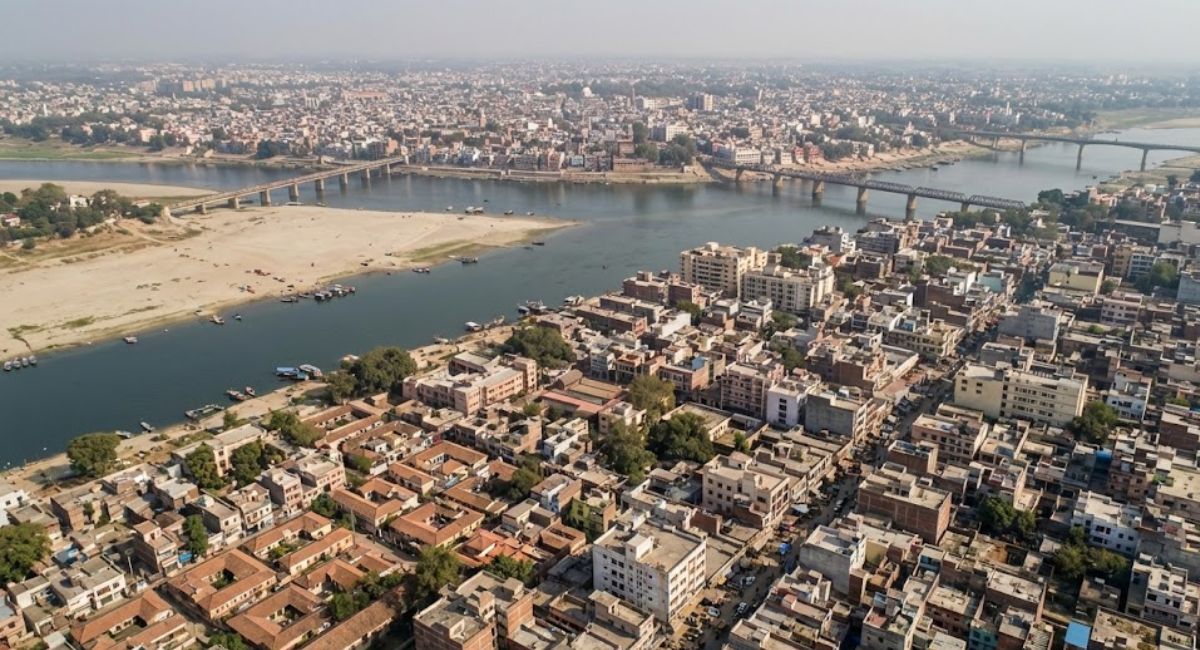
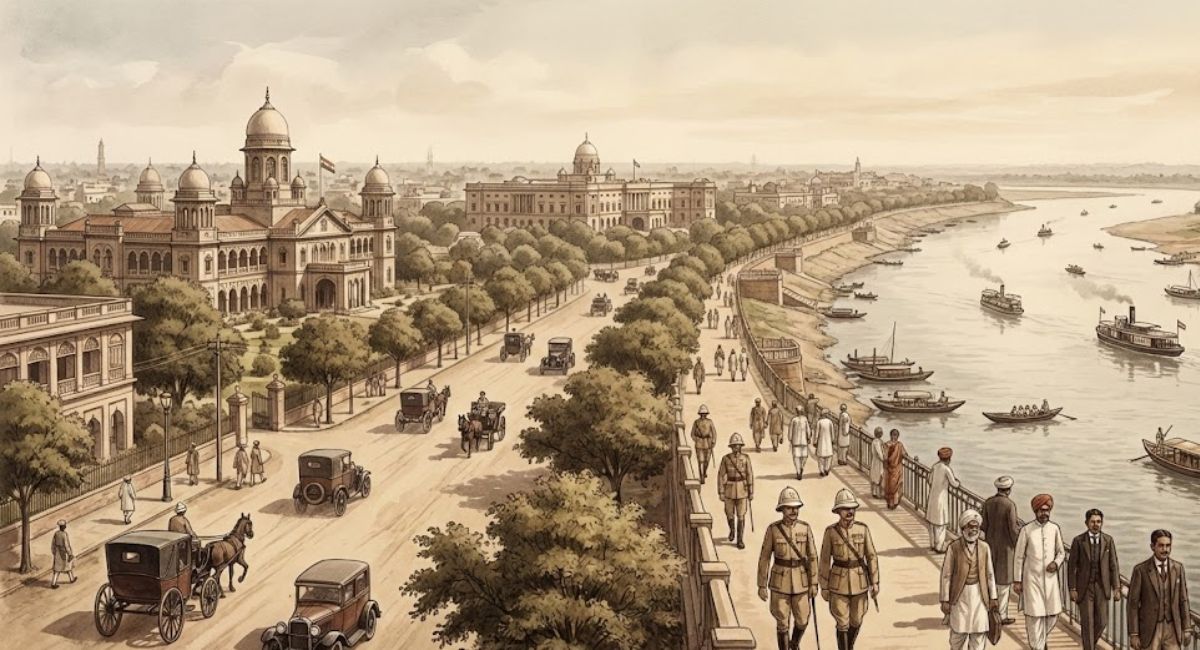
Allahabad, now known as Prayagraj, played a major role during British rule in India. The British did not choose this city by chance. They selected Allahabad as a provincial capital because of its strategic location, political importance, and administrative value. During the colonial era, Allahabad became a center of governance, law, education, and culture in North India.
As a provincial capital, Allahabad shaped policies that affected millions of people. It also became a hub for British officials, Indian elites, and reform movements. Many important institutions, buildings, and political events of modern India began in Allahabad during this period.
This article explains why Allahabad became a provincial capital, how the British governed the region from here, and how this period changed the city forever.
Allahabad Before British Rule
Mughal Era Importance
Allahabad already had political value before the British arrived. Emperor Akbar founded the city in 1583 and named it Ilahabas. He built the Allahabad Fort at the meeting point of the Ganga and Yamuna rivers. The city served as a military and administrative center under the Mughals.
Strategic Geography
Allahabad lies at the Triveni Sangam where the Ganga, Yamuna, and mythical Saraswati meet. This location made it important for trade, pilgrimage, and military control. Whoever controlled Allahabad controlled movement across North India.
British Arrival in Allahabad
East India Company Takeover
The British East India Company took control of Allahabad in 1765 after the Battle of Buxar. They received Diwani rights from the Mughal emperor, which gave them authority to collect revenue in Bengal, Bihar, and Awadh.
Allahabad became one of the first administrative centers under British control in North India.
Early Colonial Administration
The British used Allahabad as a military base and revenue center. They built cantonments, courts, and offices. The city started to change from a Mughal town into a colonial administrative city.
Allahabad as a Provincial Capital
Capital of North-Western Provinces
In 1836, the British made Allahabad the capital of the North-Western Provinces. This region included large parts of modern Uttar Pradesh and Uttarakhand. Allahabad served as the political and administrative headquarters of British rule in this region.
Capital of United Provinces
In 1902, the North-Western Provinces merged with Awadh to form the United Provinces of Agra and Oudh. Allahabad remained the capital until 1921, when the capital shifted to Lucknow.
During this time, Allahabad was one of the most important provincial capitals in British India.
Why the British Chose Allahabad as Capital
Central Location
Allahabad is located between Delhi, Kolkata, and Lucknow. It was easy for British officials to travel and manage large territories from here.
River Transport and Railways
The city had strong river transport routes and later railway connections. This made movement of troops, officials, and goods easy.
Political Stability
The British saw Allahabad as a stable and controllable city. It had a strong military presence and loyal administrative officers.
Administrative Structure in British Allahabad
Governor and Provincial Government
Allahabad hosted the Lieutenant Governor of the North-Western Provinces. The governor managed revenue, law, education, public works, and police.
Civil Services and Bureaucracy
British civil servants lived in Allahabad. They controlled districts, courts, and revenue systems. Many Indian elites also joined administrative services from this city.
Law and Judiciary
The Allahabad High Court was established in 1866. It became one of the most powerful courts in India. Many famous judges and lawyers worked here.
Urban Planning and Colonial Architecture
Civil Lines Area
The British built Civil Lines as a planned residential area for Europeans. It had wide roads, bungalows, parks, and clubs. This area still exists and remains one of the most developed parts of Prayagraj.
Government Buildings
Important buildings constructed during this period include:
- Allahabad High Court
- Government House (Raj Bhavan)
- Allahabad University buildings
- Muir Central College
- Public libraries and offices
These structures followed British architectural styles with large domes, pillars, and gardens.
Education and Intellectual Life
Allahabad University
Founded in 1887, Allahabad University became known as the Oxford of the East. It produced many scholars, politicians, and civil servants.
Schools and Colleges
British missionaries and Indian reformers opened many schools. English education spread among the elite and middle class. This created a new educated Indian society.
Political Movements in Provincial Capital
Indian National Congress Activities
Allahabad played a major role in India’s freedom movement. The Indian National Congress held several sessions in the city. Leaders like Jawaharlal Nehru, Motilal Nehru, and others lived here.
Home Rule and Independence Movement
Many protests, meetings, and publications started from Allahabad. The city became a center of nationalist thought and political activism.
Economic and Social Impact
Trade and Commerce
As a capital, Allahabad attracted traders, bankers, and merchants. Markets developed around the administrative center. The city became an economic hub in North India.
Social Reforms
Reform movements related to education, women’s rights, and social justice grew in Allahabad. Newspapers and journals published debates on Indian society.
British Cultural Influence
Clubs and Lifestyle
British officers created clubs, theaters, and social institutions. Cricket, tennis, and English lifestyle practices entered Indian society through Allahabad.
Press and Literature
Allahabad became a center for Hindi and English journalism. Many newspapers and literary magazines started here.
Decline as Provincial Capital
Shift of Capital to Lucknow
In 1921, the British moved the provincial capital to Lucknow. Lucknow had historical importance in Awadh and a larger political base.
Continued Importance
Even after losing capital status, Allahabad remained a judicial, educational, and political center.
Legacy of British Provincial Capital Status
Infrastructure Legacy
Roads, railways, buildings, and institutions built during this period still shape the city.
Political and Cultural Identity
Allahabad developed a strong intellectual and political identity. Many prime ministers, judges, and leaders came from this city.
Modern Prayagraj
Today, Prayagraj continues to benefit from the institutions created during the colonial era. The city remains a major center for education, law, and culture.
Key Historical Entities and Attributes
- Allahabad High Court – established 1866, judicial authority in North India
- Allahabad University – founded 1887, major educational institution
- North-Western Provinces – British administrative region
- United Provinces – provincial entity formed in 1902
- Jawaharlal Nehru – Indian leader, associated with Allahabad
- Motilal Nehru – political leader and lawyer in Allahabad
FAQs
Why was Allahabad chosen as a provincial capital
The British chose Allahabad because of its central location, strong military presence, and administrative convenience.
When was Allahabad the capital of North-Western Provinces
Allahabad became the capital in 1836 and remained so until 1921.
Why was the capital moved to Lucknow
The British shifted the capital to Lucknow for political and administrative reasons related to Awadh region governance.
What institutions were built during this period
Major institutions include Allahabad High Court, Allahabad University, Civil Lines, and Government House.
How did British rule change Allahabad
British rule introduced modern administration, education systems, urban planning, and political institutions.
Conclusion
British Allahabad as a provincial capital played a major role in shaping modern North India. The city served as a center of governance, education, law, and political movements. British administrators, Indian elites, and reformers all contributed to its growth.
Although the capital later shifted to Lucknow, Allahabad retained its importance. The colonial legacy still influences Prayagraj’s identity, infrastructure, and institutions. Understanding this history helps us see how Prayagraj became one of India’s most historically significant cities.

Maharshi Kushwaha is the founder of Prayagraj Portal, a digital platform dedicated to providing accurate news, city updates, culture, education, tourism, jobs, events, and essential services related to Prayagraj (Allahabad). Though he is not originally from Prayagraj, he frequently visits the city and works closely with a strong local team to ensure authentic and responsible reporting. A passionate digital creator and youth entrepreneur, he focuses on building meaningful platforms that promote information access, youth engagement, and community development. His vision is to make Prayagraj Portal one of the most trusted and impactful digital sources for everything related to Prayagraj.