Prayagraj, formerly known as Allahabad, played a key role in the Mughal administrative system in India. Its strategic location at the confluence of the Ganga and Yamuna rivers made it important for governance, military control, trade, and culture. The Mughals did not see Prayagraj as just a religious city. They developed it as a major administrative and military center.
From the time of Emperor Akbar to the later Mughal rulers, Prayagraj served as a provincial capital, a fort city, and a center for revenue administration. The Mughal rulers built forts, appointed governors, collected taxes, and maintained law and order through a structured system.
This article explains how Prayagraj functioned in the Mughal administration system, including its political role, military importance, economic structure, revenue system, and cultural impact.
Prayagraj Before the Mughals
Before Mughal rule, Prayagraj was known as Prayag and was a major Hindu pilgrimage center. It was part of various Indian kingdoms including the Delhi Sultanate. When the Mughals arrived, they recognized its importance and transformed it into a strong administrative city.
Establishment of Mughal Control Over Prayagraj
Emperor Akbar captured Prayagraj in the 16th century and renamed it Allahabad. He understood the importance of the city due to:
- Its location on major river routes
- Its proximity to important trade routes
- Its religious importance among Hindus
- Its strategic military position
Akbar ordered the construction of the Allahabad Fort, which became the center of Mughal administration in the region.
Prayagraj as a Subah Capital
Under the Mughal administrative system, the empire was divided into provinces called Subahs. Prayagraj was part of the Subah of Allahabad.
The Subah system was introduced by Akbar to improve governance. Allahabad Subah became an important administrative unit with its own governor and officials.
Key Administrative Officials in Prayagraj
Subahdar
The Subahdar was the provincial governor appointed by the Mughal emperor. He was responsible for:
- Maintaining law and order
- Managing the army in the province
- Supervising revenue collection
- Representing the emperor
Diwan
The Diwan was the chief revenue officer. He handled:
- Land revenue records
- Tax collection
- Financial administration
Faujdar
The Faujdar managed military and police duties. He controlled:
- Law enforcement
- Security
- Criminal justice
Qazi
The Qazi was the judicial officer who applied Islamic law and local customs to resolve disputes.
Allahabad Fort and Military Administration
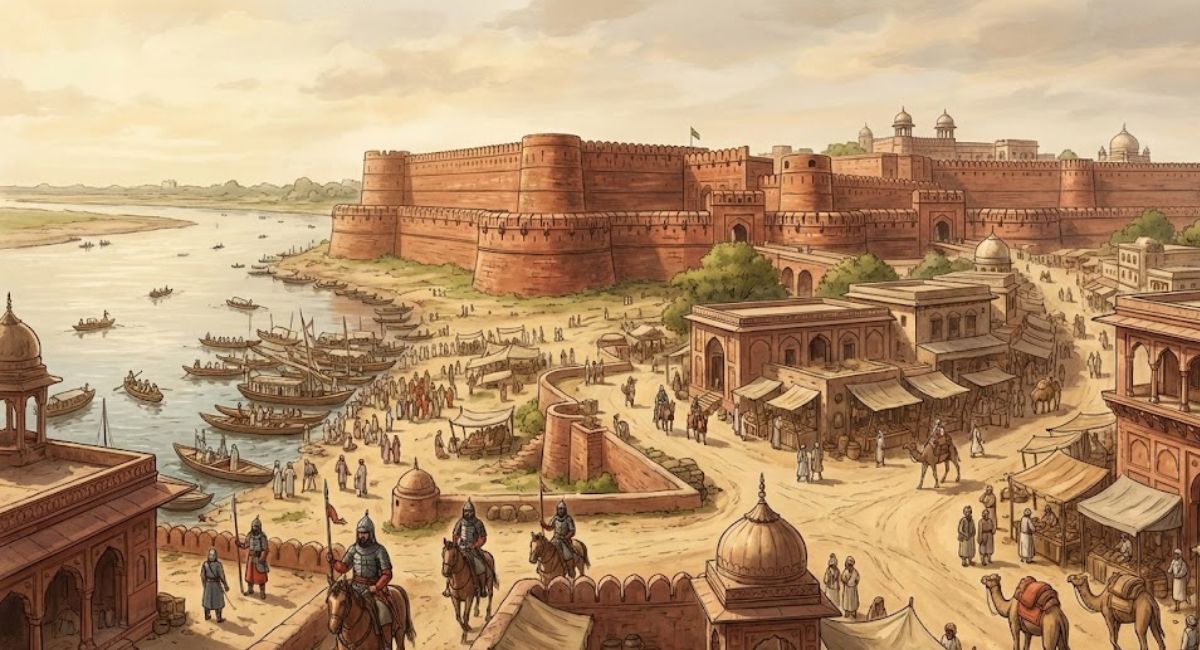
Allahabad Fort was one of the strongest forts built by the Mughals. It served multiple purposes:
- Military base
- Administrative headquarters
- Royal residence
- Defense against rebellions
The fort housed Mughal troops, artillery, and officers. It controlled river traffic and trade routes.
Military Importance
Prayagraj was important for:
- Suppressing rebellions in North India
- Protecting the eastern frontier
- Controlling the Gangetic plains
- Managing Rajput and local uprisings
Many Mughal princes and generals stayed in Allahabad Fort, including Prince Salim who later became Emperor Jahangir.
Revenue and Land Administration in Prayagraj
The Mughal revenue system was one of the most organized systems in medieval India. Prayagraj followed Akbar’s land revenue policies.
Zabt System
The Zabt system was used to calculate land revenue. Officials measured land and assessed taxes based on:
- Soil quality
- Crop type
- Irrigation facilities
- Past production records
Farmers paid revenue in cash or kind.
Jagirdari System
Land was granted to Mughal officials and nobles as Jagirs. These officials collected revenue from the land and maintained troops for the emperor.
Prayagraj had many Jagirdars who managed rural areas and supported Mughal administration.
Trade and Economic Role of Prayagraj
Prayagraj was an important trade center during the Mughal period. Its rivers made it a hub for transport and commerce.
Major Economic Activities
- Agriculture and grain trade
- Textile production
- Handicrafts
- River trade and shipping
- Market towns and bazaars
Merchants from different parts of India came to Prayagraj to trade goods.
Religious and Cultural Administration
The Mughals allowed religious freedom in Prayagraj. The city remained a major Hindu pilgrimage center even under Mughal rule.
Kumbh Mela and Pilgrimage
The Mughal administration provided security and infrastructure during religious gatherings like the Kumbh Mela. This helped maintain peace and trade during festivals.
Cultural Influence
Prayagraj became a center for:
- Persian literature
- Islamic architecture
- Hindu religious practices
- Art and music
Prayagraj Under Jahangir and Shah Jahan
After Akbar, Prayagraj continued to be important under Jahangir and Shah Jahan.
Jahangir’s Period
Prince Salim used Allahabad as his power base before becoming emperor. He established his own court and administration in the city.
Shah Jahan’s Period
Shah Jahan improved the fort and administration. Prayagraj remained a key provincial city.
Prayagraj During Aurangzeb’s Rule
Aurangzeb strengthened Mughal control but also increased taxes and religious restrictions. Prayagraj remained a major administrative center but faced:
- Increased revenue pressure
- Local resistance
- Decline in trade
Decline of Mughal Administration in Prayagraj
After Aurangzeb, Mughal power weakened. Local rulers, Marathas, and later the British took control.
The Mughal administrative system collapsed due to:
- Weak successors
- Rebellions
- Financial crisis
- Foreign invasions
By the 18th century, Prayagraj became part of British colonial administration.
Impact of Mughal Administration on Modern Prayagraj
The Mughal system shaped Prayagraj’s modern identity. Many features today exist because of Mughal governance:
- Allahabad Fort
- Urban planning
- Revenue records and land systems
- Cultural diversity
- Religious coexistence
Key Contributions of the Mughals to Prayagraj
Administrative Structure
The Subah system laid the foundation for modern provincial administration.
Military Infrastructure
The fort and cantonment areas influenced later British military planning.
Economic Growth
Trade and agriculture expanded due to Mughal policies.
Cultural Harmony
The city became a blend of Hindu and Islamic traditions.
Conclusion
Prayagraj played a major role in the Mughal administration system. It was not just a religious city but a strong administrative, military, and economic center. The Mughal rulers developed Prayagraj with structured governance, revenue systems, and military control. Their policies shaped the city’s growth and left a lasting impact on its history, culture, and administration.
Understanding Prayagraj’s role in the Mughal period helps us understand how medieval Indian governance worked and how this historic city became one of the most important centers in North India.
FAQs
What was Prayagraj called during the Mughal period
Prayagraj was renamed Allahabad by Emperor Akbar.
Why was Prayagraj important for the Mughals
Its strategic location, trade routes, religious importance, and military value made it important.
What was the Subah system
It was a provincial administrative system introduced by Akbar to manage the empire efficiently.
Who governed Prayagraj in the Mughal era
A Subahdar governed the province with help from Diwan, Faujdar, and Qazi.
What is the significance of Allahabad Fort
It served as a military base, administrative center, and royal residence.

Maharshi Kushwaha is the founder of Prayagraj Portal, a digital platform dedicated to providing accurate news, city updates, culture, education, tourism, jobs, events, and essential services related to Prayagraj (Allahabad). Though he is not originally from Prayagraj, he frequently visits the city and works closely with a strong local team to ensure authentic and responsible reporting. A passionate digital creator and youth entrepreneur, he focuses on building meaningful platforms that promote information access, youth engagement, and community development. His vision is to make Prayagraj Portal one of the most trusted and impactful digital sources for everything related to Prayagraj.