
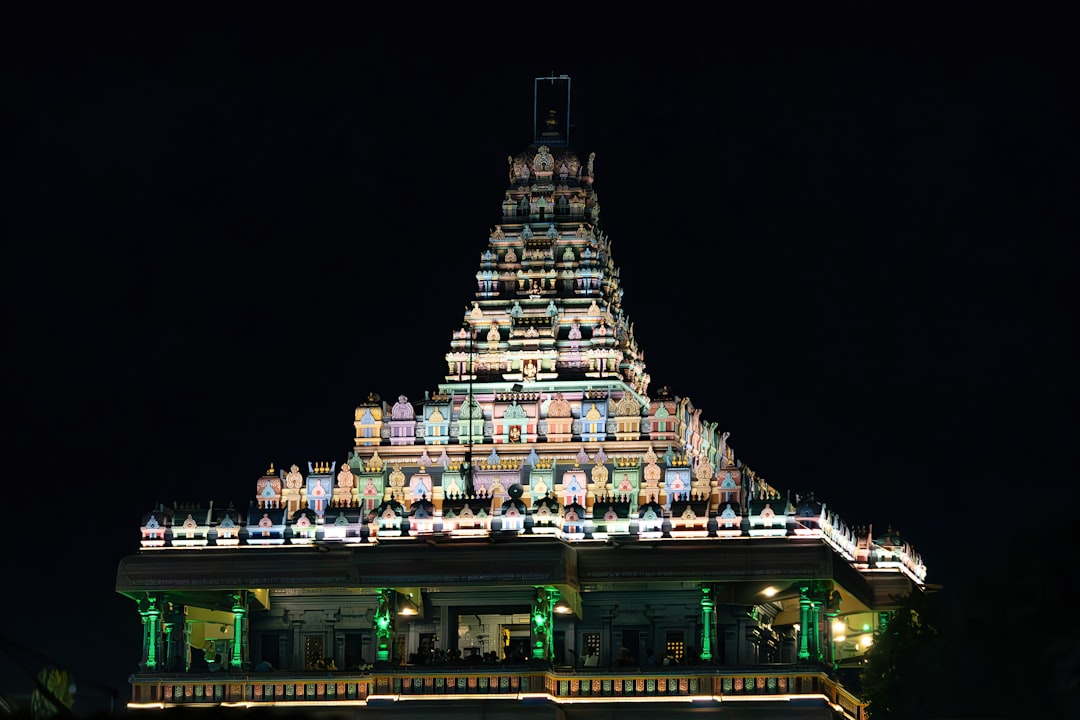
Prayagraj, formerly known as Allahabad, is a city where history is not kept behind glass. It is in the streets you walk, in the red sandstone of a Mughal fort, in the Gothic arches of a colonial cathedral, in the tombs of a Mughal garden, and in the houses where the freedom movement was planned. The Ganga, the Yamuna and the mythical Saraswati meet here, and every ruler who held the city left a building behind. The best way to see it all is on foot, at walking pace, with time to stop, look up, and talk to the people who live beside these buildings. This guide covers four heritage walks that together take in the whole city, from the Sangam to Civil Lines, from the old city markets to the riverfront temples.
The walks below follow that history in order, from the Mughal fort to the colonial town to the old city, and they can be done one at a time or combined across two days. For the full story behind the buildings, start with the History of Allahabad.
Why choose a heritage walk?
You might be wondering why you should walk when you can take a taxi or an auto-rickshaw. A heritage walk offers a different kind of experience, and it suits this city better than a vehicle does. You move at your own pace, with no rushing from one site to another, so you can take time to admire the details and absorb the atmosphere. You also find the hidden places, because the most interesting corners of Prayagraj are tucked away in narrow lanes and alleyways that a vehicle would pass by. Walking gives you chances to talk to residents, hear their stories, and get a true sense of the city’s culture, and it keeps you active while you learn about history.
Walk 1: The Allahabad Fort and Sangam Walk
This walk combines the grandeur of the Allahabad Fort with the spiritual heart of the city, the Sangam. Start at the fort, then walk down to the river, and finish at the temple of the reclining Hanuman. Allow about 3 to 4 hours for this walk, including time at the Sangam.
Allahabad Fort
Akbar founded the fort in 1583, on the bank of the Yamuna near the Sangam. It is a prime example of Mughal military architecture, built in red sandstone with massive walls and high bastions, in a style that blends Persian and Indian elements. The Akbarnama records it as the largest fort ordained by Akbar, and names Raja Todar Mal as its chief architect. Today the fort is recognised by the Archaeological Survey of India as a Monument of National Importance, ASI monument number N-UP-S1. Learn more in Akbar’s Legacy in Prayagraj: The Fort.
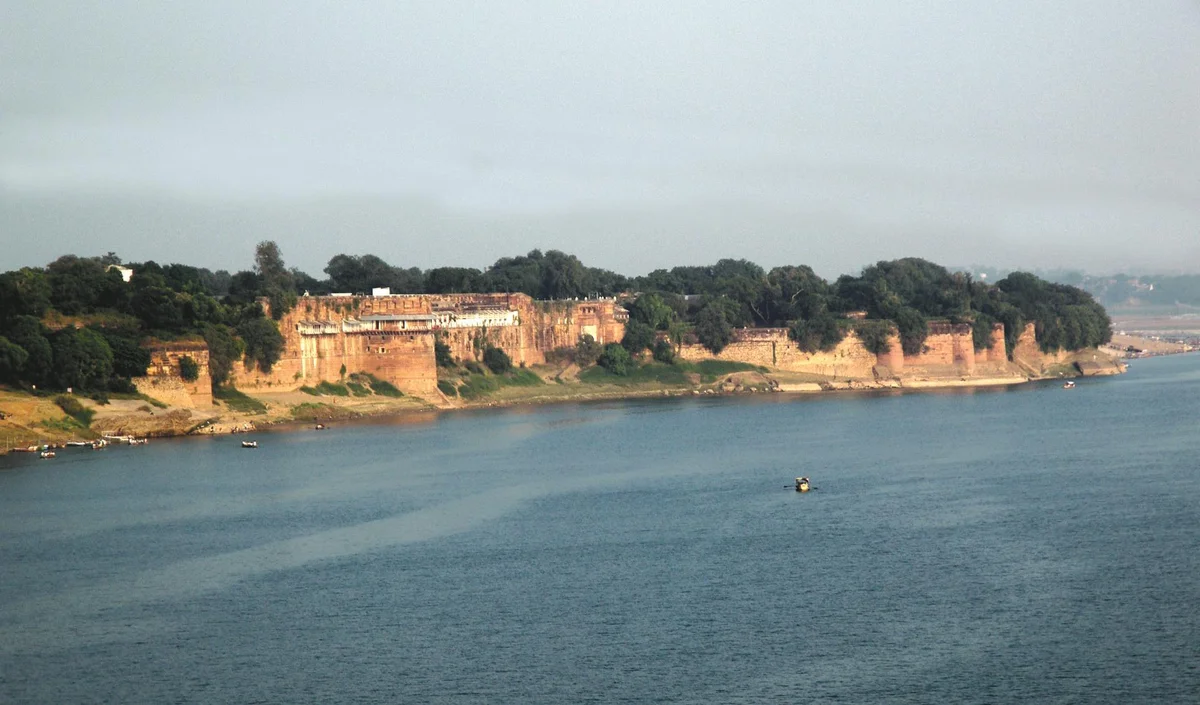
Most of the fort is still under Indian Army control, so most sections are restricted to visitors. What a visitor can see is the exterior, the riverfront, and the designated areas inside, including the Ashoka Pillar, a polished sandstone pillar about 10.6 metres high from about 232 BCE, and the Patalpuri Temple and Akshayavat, the underground shrine and the immortal banyan tree. The Saraswati Koop, a well inside the fort, is believed by devotees to be the source of the Saraswati river. The palace popularly called Jodhabai Palace is part of the Zenana, or Rani Mahal, associated with Mariam-uz-Zamani. Check the visiting hours and photography restrictions before you go, because access rules for the fort change.
Triveni Sangam
From the fort, walk down to the Sangam and witness the meeting of the Ganga, the Yamuna and the mythical Saraswati, who is believed to flow underground. The name Prayag means place of sacrifice, and the city is also called Tirtharaj, the king of pilgrimage places. Take a boat ride to experience the Sangam up close and observe the rituals performed by pilgrims. Read the full guide in Triveni Sangam.
Bade Hanuman Mandir
Close to the Sangam and the fort stands the Bade Hanuman Mandir, also called Lete Hanuman Mandir, the temple of the reclining Hanuman. Inside, set below ground level, lies a reclining idol of Hanuman about 20 feet long, the only great reclining image of Hanuman of its kind. In the monsoon the rising river partly submerges the idol, which devotees take as the river bathing the deity. Tradition holds the temple to be about 600 to 700 years old. Devotees believe the merit of the Sangam pilgrimage is complete only after darshan here. Wear comfortable shoes, carry water, and be prepared for crowds, especially during the Kumbh Mela and the Magh Mela. The most recent Mahakumbh was held from 13 January to 26 February 2025, and the Press Information Bureau reported more than 66 crore devotees by the concluding day.
Walk 2: The Civil Lines Walk, a Colonial Legacy
Step back in time and explore the elegant colonial architecture of Civil Lines, the British-era administrative district of Allahabad. Civil Lines was built in 1857-58, just after the Rebellion of 1857, under the supervision of Cuthbert Bensley Thornhill. It was the largest town-planning project carried out in India before the establishment of New Delhi. At first it was called Cannington, also Canning Town, and it was known as the White Town, because it was predominated by British residents. Start near All Saints Cathedral and walk the wide, tree-lined roads. Allow about 2 to 3 hours for this walk.
All Saints Cathedral
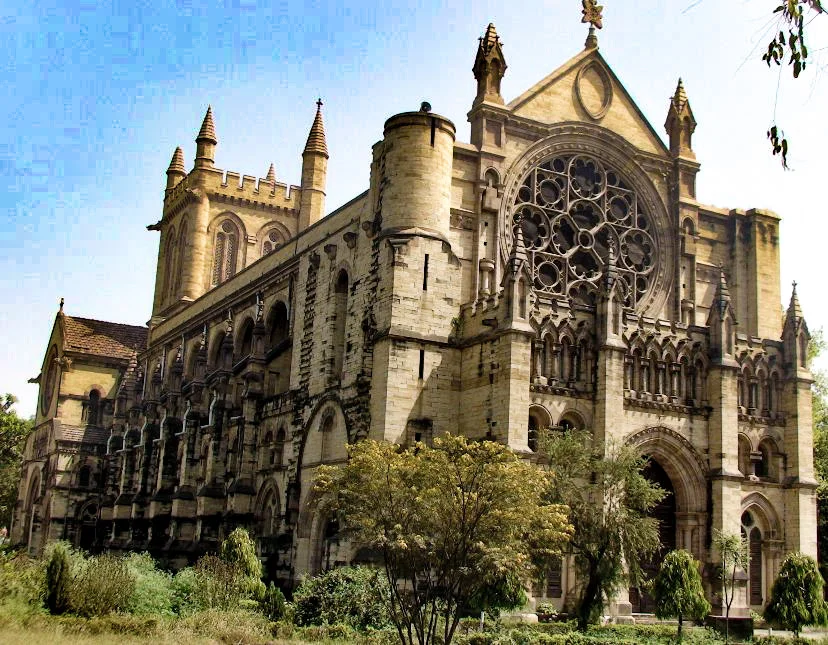
All Saints Cathedral, also called Patthar Girja, the Church of Stones, is the most famous church in Prayagraj and the finest Gothic Revival building in the city. It was designed by William Emerson, who also designed the Victoria Memorial in Kolkata, and it is modelled on 13th century Gothic churches. The foundation stone was laid by Elizabeth Huntly Wemyss, wife of Lieutenant-Governor Sir William Muir, on 10 April 1871, and the cathedral was consecrated in 1887 and completed in 1891. For the other colonial churches in the city, see the guide to the British-era churches of Prayagraj.
Alfred Park and the High Court
From the cathedral, walk to Alfred Park, now Chandrashekhar Azad Park, laid out in 1870 to mark the visit of Prince Alfred, Duke of Edinburgh, and at 133 acres the largest park in the city. Chandrashekhar Azad died in this park on 27 February 1931. Surrounded by British police, he shot himself with his last bullet rather than be captured alive. After independence the park was renamed for him. The full story is in the guide to Chandrashekhar Azad Park. Inside the park stands the Thornhill Mayne Memorial, now the Allahabad Public Library, designed by Richard Roskell Bayne in Scottish Baronial Revival style and completed in 1870. Nearby, admire the High Court of Judicature at Allahabad, established on 17 March 1866. Its present building was designed by Frank Lishman, its foundation stone laid on 18 March 1911 and construction completed on 27 November 1916. It is a working court, not a museum, so visitors see it from outside.
Muir Central College and Anand Bhavan
Continue to Muir Central College, the building that gave Prayagraj its nickname, the Oxford of the East. The college began work in a rented building on 1 July 1872, and its building, designed by William Emerson, was formally opened on 8 April 1886. The University of Allahabad was established on 23 September 1887. End the walk at Anand Bhavan, the ancestral home of the Nehru family, now a museum. The old house was bought by Motilal Nehru in 1900 and first called Anand Bhavan. In 1930, he donated that house to the Indian National Congress, and it was renamed Swaraj Bhavan, while a new house built next door took the name Anand Bhavan. Indira Gandhi donated Anand Bhavan to the Government of India in 1970, and it became a museum. Check the museum opening hours before you go, and enjoy a cup of tea at one of the cafes in Civil Lines to soak in the atmosphere.
Walk 3: Khusro Bagh and the Old City
This walk turns from colonial Civil Lines to Mughal Prayagraj and the busy old city. Start at Khusro Bagh, near Prayagraj Junction, then walk into the old city markets of Chowk and Atala. Allow about 3 to 4 hours for this walk, including time in the markets.
Khusro Bagh
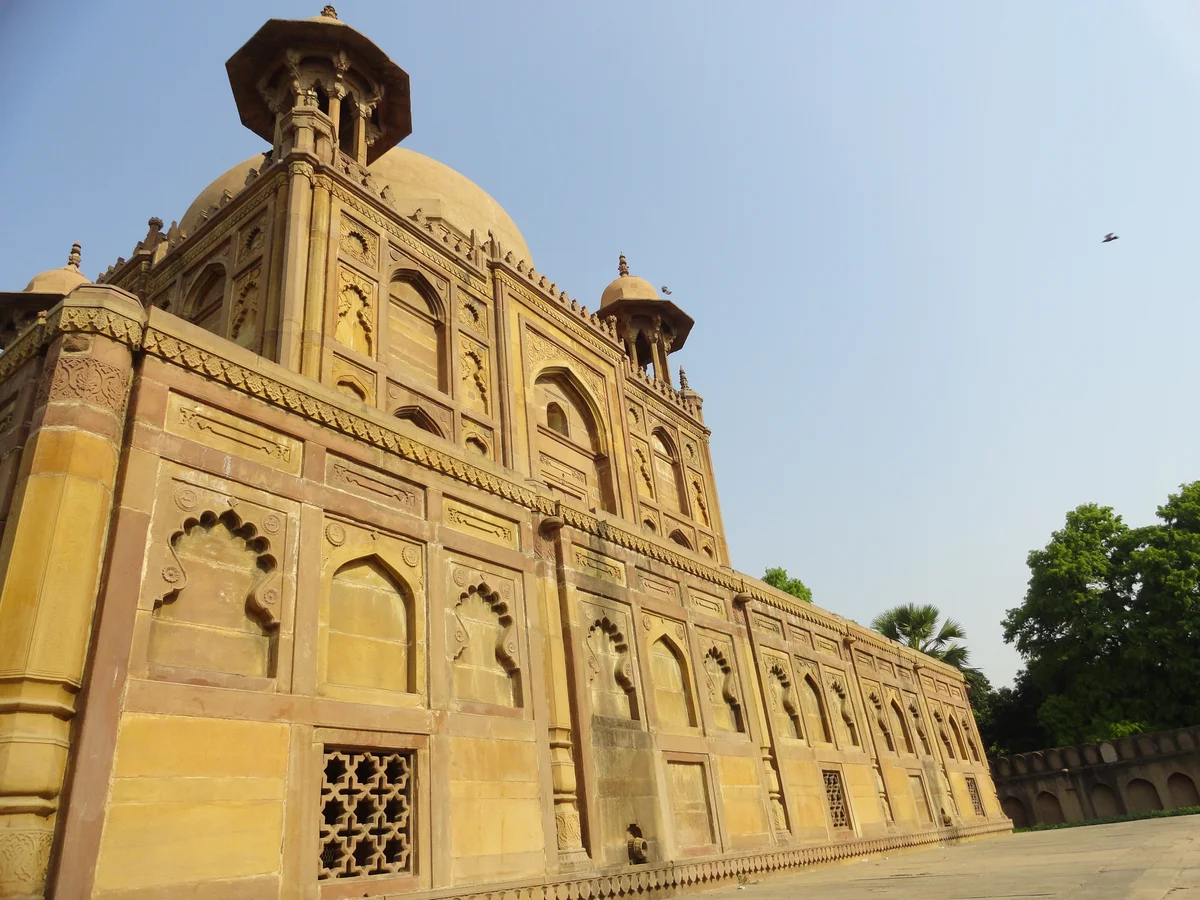
Khusro Bagh is a walled garden of about 40 acres, laid out in the Persian charbagh style, a garden divided into four quarters by paths and water channels, with tombs set inside it. It was built under Emperor Jahangir in the early 17th century, and it takes its name from his eldest son, Prince Khusro. Inside stand the sandstone tombs of Shah Begum, Prince Khusro, and Nisar Begum, with a fourth tomb, that of Bibi Tamolan, at the western end. Shah Begum’s tomb was designed by Aqa Reza, Jahangir’s principal court artist. Prince Khusro rebelled against his father in 1606, was captured and blinded, and died in 1622. Nisar Begum’s tomb, built in 1624-25, is the most elaborate of the three. In the uprising of 1857, the garden became the headquarters of the revolting sepoys under Maulvi Liaquat Ali. Khusro Bagh is one monument among several in the city, and the others are covered in the guide to Famous Monuments in Prayagraj.
Chowk, Atala and Jama Masjid
From the garden, walk into the old city and its markets, Chowk and Atala, where the lanes are narrow, the shops are small and old, and the noise is part of the experience. Sample local food, browse traditional handicrafts, and watch how the old city still works as a trading town. The Jama Masjid stands in the heart of the old city, one of its largest and most prominent mosques, and a good landmark for finding your way through the lanes. Dress modestly when visiting religious sites, be mindful of your belongings in crowded areas, bargain when shopping, and try the local street food, choosing vendors with good hygiene practices.
Walk 4: The Riverfront Temples Walk
The fourth walk follows the Yamuna riverfront, from the temples near the fort to the Shakti Peetha at Alopi Bagh. It is a quieter walk than the first three, and it suits an early morning start, when the river is calm and the temples are at their busiest. Allow about 2 to 3 hours for this walk.
Mankameshwar Temple and Saraswati Ghat
Start at Mankameshwar Temple, a Shiva temple on the bank of the Yamuna near Saraswati Ghat, opposite Minto Park. The temple is a Siddh peeth of Adi Guru Shankaracharya, and its name means the fulfiller of wishes. From the temple, walk along the riverfront at Saraswati Ghat, where the Yamuna runs wide and the ghat steps lead down to the water. This is the same riverbank the fort looks over, seen from the other side.
Minto Park and Alopi Devi Mandir
Cross to Minto Park, on the bank of the Yamuna near the Allahabad Fort. On 1 November 1858, Lord Canning read out Queen Victoria’s Proclamation on this spot, transferring control of India from the East India Company to the British Crown. To mark the 50th anniversary, the Earl of Minto installed a proclamation pillar here in 1908, and in 1910 the park was named Minto Park. After independence the busts were replaced by the Ashoka Lion Capital, and the park was renamed Madan Mohan Malaviya Park. The pillar still stands, and the park is still a public garden. End the walk at Alopi Devi Mandir at Alopi Bagh, west of Daraganj, one of the Shakti Peethas of Prayag. Devotees worship a sacred cradle here instead of an idol, because popular belief holds that the fingers of the goddess Sati fell at this spot and disappeared, which gives the goddess the name Alopi, the vanished one.
Organised heritage walks
You do not have to plan these walks alone. UP Tourism runs a Prayagraj Heritage Walk and a Sangam Walk, with the walk routes on the official tourism website and signboards at the stops, so you can follow the route on your own with the help of the walk route on your phone. The Allahabad Museum and the local organisation Dhara aur Dharohar launched the city’s first Heritage Walk, flagged off by Divisional Commissioner and Allahabad Museum Director Soumya Agrawal. The inaugural walk covered three galleries of the Allahabad Museum, the Public Library, Vijayanagaram Hall, the University of Allahabad campus and its Faculty of Arts. The local operator Dus Dishaa Walks, based in Civil Lines, runs guided heritage walks in the city, including a walk of Allahabad University. Check the current schedule and price with UP Tourism or the operator before booking, because both change.
How to combine the walks
With one day, take Walk 1 in the morning, when the light on the river is at its best, and Walk 2 in the afternoon, when Civil Lines is at its liveliest. With two days, add Walk 3 on the second morning, when the old city markets are at their busiest, and Walk 4 early on the second morning or as a quiet evening walk along the riverfront. During the Kumbh Mela and the Magh Mela, the roads near the Sangam are closed and you will walk further than usual, so allow extra time and carry water. The Kumbh Mela was inscribed on UNESCO’s Representative List of the Intangible Cultural Heritage of Humanity in December 2017, and the city was renamed Prayagraj in October 2018, when the Uttar Pradesh cabinet approved the change on 16 October and the gazette notification followed on 18 October.
What to eat on the way
Prayagraj offers a wide variety of food, from street food stalls to restaurants serving traditional Indian and international food. Some dishes to try include Allahabadi Tehri, Kachori Sabzi, and Imarti. Civil Lines and Chowk are good areas to explore for food, and the lanes around the old city markets are where the oldest food stalls stand. Eat where the food is cooked fresh in front of you, and carry water, because the walks are long and the summer heat is strong.
Tips for a successful heritage walk
Plan ahead by researching the places you want to visit and their opening hours, and check for festivals or events that might affect your plans. Wear comfortable shoes, because you will be doing a lot of walking, and wear light, breathable clothing during the summer months. Stay hydrated by carrying a water bottle and refilling it whenever possible. Dress modestly, especially when visiting religious sites, and remove your shoes where the temple asks you to. Be aware of your surroundings, keep an eye on your belongings, and be mindful of traffic, especially in crowded areas. Hire a local guide if you want the stories behind the buildings, and learn a few basic Hindi phrases, which help when you are asking for directions in the old city lanes or ordering food in the markets.
Frequently Asked Questions
Is it safe to walk around Prayagraj?
Generally, Prayagraj is a safe city for tourists. However, it is always important to be aware of your surroundings and take precautions against petty theft, especially in crowded areas. Avoid walking alone late at night, and keep your phone and wallet secure in the markets.
What is the best time of year to visit Prayagraj?
The best time to visit Prayagraj is during the winter months, from October to March, when the weather is pleasant and cool. Summers, from April to June, can be very hot and humid, so start early in the morning and carry water if you walk then. The Magh Mela runs from mid-January to late February, and the Kumbh Mela is held every 12 years.
Are there any organised heritage walk tours available?
Yes. UP Tourism runs a Prayagraj Heritage Walk and a Sangam Walk, with routes on the official tourism website and signboards at the stops. The Allahabad Museum and Dhara aur Dharohar run guided heritage walks, and the local operator Dus Dishaa Walks runs guided walks from Civil Lines. Check the current schedule and price with the operator before booking.
What are some good places to eat in Prayagraj?
Prayagraj offers a wide variety of dining options, from street food stalls to restaurants serving traditional Indian and international cuisine. Some dishes to try include Allahabadi Tehri, Kachori Sabzi, and Imarti. Civil Lines and Chowk are good areas to explore for food.
How many days do the heritage walks need?
Two days cover all four walks comfortably: the fort and Sangam walk and the Civil Lines walk on the first day, and the Khusro Bagh and old city walk and the riverfront temples walk on the second day. With one day, take the fort and Sangam walk in the morning and the Civil Lines walk in the afternoon.
Can I take photographs inside the fort?
Most of the fort is under Indian Army control, so most sections are restricted to visitors, and photography is restricted in places. Check the access and photography rules before visiting, and do not assume that every area you can see from outside is open to enter.
Exploring Prayagraj on foot is an enriching experience that allows you to connect with the city’s history, culture, and people on a deeper level. So, lace up your walking shoes, grab your camera, and get ready to discover the hidden gems of this fascinating city.

Maharshi Kushwaha is the founder of Prayagraj Portal, a digital platform dedicated to providing accurate news, city updates, culture, education, tourism, jobs, events, and essential services related to Prayagraj (Allahabad). Though he is not originally from Prayagraj, he frequently visits the city and works closely with a strong local team to ensure authentic and responsible reporting. A passionate digital creator and youth entrepreneur, he focuses on building meaningful platforms that promote information access, youth engagement, and community development. His vision is to make Prayagraj Portal one of the most trusted and impactful digital sources for everything related to Prayagraj.