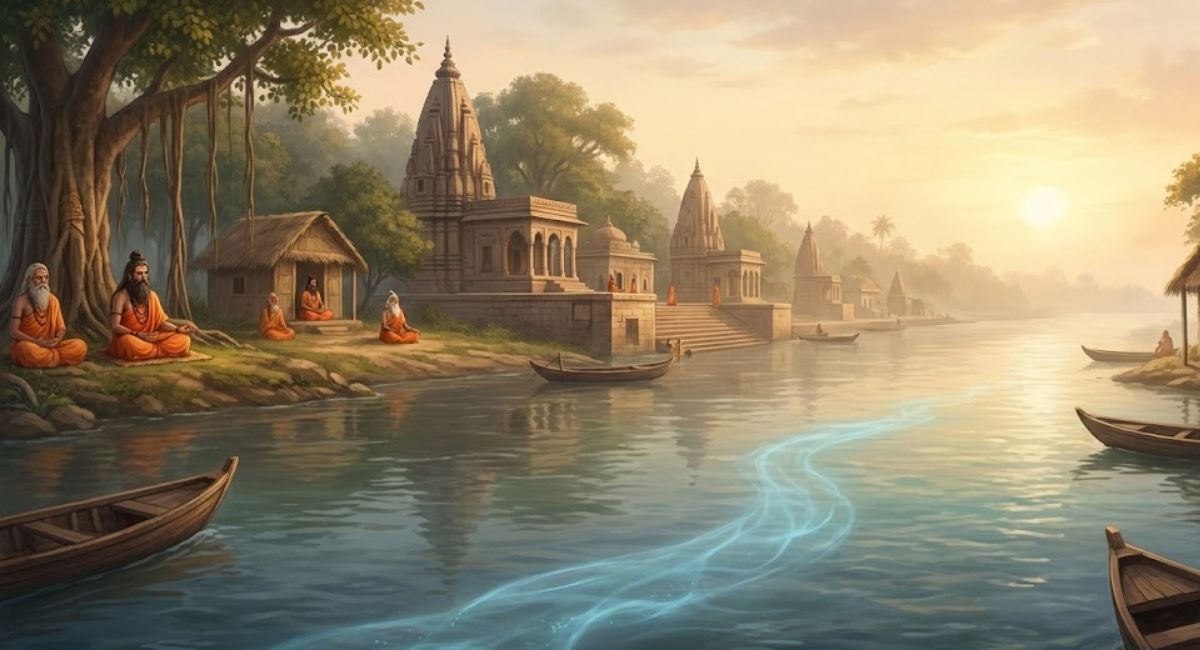
Ancient Prayag, known today as Prayagraj, holds a sacred place in Hindu scriptures and Indian civilization. This city is famous as the land where the Ganga, Yamuna, and the mystical Saraswati rivers meet. For thousands of years, saints, sages, kings, and pilgrims have visited Prayag to seek spiritual knowledge, perform rituals, and connect with divine energy.
Hindu texts describe Prayag as the King of Tirthas, meaning the most sacred pilgrimage site. From the Vedas to the Puranas, Prayag is mentioned as a place of cosmic significance where gods descend, sages meditate, and humans attain spiritual merit.
In this article, you will learn about the origin of Prayag in Hindu scriptures, its religious importance, mythological stories, cultural role, and why it remains one of the holiest places in India today.
The Meaning and Origin of Prayag in Hindu Tradition
The word Prayag comes from Sanskrit and means a place of sacrifice or a sacred confluence. In Hindu tradition, Prayag is not just a city but a spiritual center where divine and earthly realms connect.
According to scriptures, Prayag was established by Lord Brahma after the creation of the universe. It was chosen as a sacred ground for yajnas and divine rituals. This made Prayag the first and most important pilgrimage site in India.
The city is also known as Triveni Sangam, the meeting point of three rivers. Ganga represents purity, Yamuna represents love and devotion, and Saraswati represents wisdom. Their union symbolizes balance in life and spirituality.
Prayag in the Vedas
The Vedas are the oldest Hindu scriptures, and they mention sacred rivers and confluences as divine locations. Although the name Prayag is not directly mentioned in early Vedic texts, the importance of river confluences is highlighted in Rigveda and Atharvaveda.
The Saraswati river is praised as a divine river in Rigveda. Later texts identify the invisible Saraswati flowing beneath the Sangam in Prayag. This belief makes Prayag a unique sacred geography where visible and invisible energies meet.
Vedic rituals often required pure water from sacred rivers, and Prayag was considered one of the most powerful sources of spiritual purification.
Prayag in the Puranas
The Puranas give detailed descriptions of Prayag and its greatness. Matsya Purana, Padma Purana, Skanda Purana, and Agni Purana describe Prayag as the Tirtharaj, the King of all pilgrimage sites.
According to Padma Purana, a bath at Prayag during auspicious times gives spiritual merit equal to performing thousands of yajnas. Skanda Purana states that Prayag is the center of the universe where Lord Vishnu resides eternally.
The Puranas also describe Prayag as a place where gods gather during Kumbh Mela, and divine nectar once fell here during the Samudra Manthan. This myth connects Prayag with immortality and divine blessings.
Prayag in the Ramayana
The Ramayana mentions Prayag during Lord Rama’s exile journey. Sage Bharadwaj had an ashram near Prayag, where Lord Rama, Sita, and Lakshman stayed.
Bharadwaj Rishi guided Lord Rama about his journey and blessed him with knowledge and protection. Prayag was described as a peaceful hermitage region filled with forests, sages, and divine energy.
This reference shows that Prayag was a spiritual learning center even during the Treta Yuga.
Prayag in the Mahabharata
The Mahabharata also highlights Prayag as a holy place. The Pandavas visited Prayag during their exile and performed rituals to gain spiritual merit.
It is believed that bathing at Prayag washes away sins and grants liberation. The Mahabharata also mentions sacred forests, sages, and hermitages around Prayag, making it a center of ancient Indian civilization and knowledge.
The Mythological Significance of Triveni Sangam
Triveni Sangam is the heart of Prayag’s spiritual identity. The Ganga and Yamuna are visible, while Saraswati is believed to flow underground. This invisible river symbolizes hidden wisdom and spiritual knowledge.
Hindu belief states that the confluence is a point where cosmic energy is strong. Meditation, prayers, and rituals performed here are believed to bring faster spiritual results.
Many saints and yogis chose Prayag for spiritual practice because of its sacred vibrations and peaceful environment.
Prayag and Kumbh Mela in Scriptures
Kumbh Mela is one of the largest religious gatherings in the world, and Prayag is one of its main locations. Hindu scriptures link Kumbh Mela to the churning of the ocean, where gods and demons fought for the nectar of immortality.
It is believed that drops of nectar fell at Prayag, Haridwar, Ujjain, and Nashik. Prayag hosts the Maha Kumbh, held every 12 years, and the Magh Mela annually.
Scriptures say that bathing at Prayag during Kumbh gives spiritual benefits equal to many lifetimes of worship.
Prayag as a Center of Knowledge and Culture
Ancient Prayag was not only a religious center but also a hub of learning and culture. Many sages, scholars, and poets lived here. Ashrams and gurukuls were established near the rivers for teaching Vedas, philosophy, astronomy, and medicine.
Prayag later became an important center during the Maurya, Gupta, and Mughal periods. The city continued to influence Indian culture, literature, and spirituality for centuries.
Spiritual Benefits of Prayag According to Hindu Beliefs
Hindu scriptures describe many spiritual benefits of Prayag. Some key beliefs include
- Bathing at Prayag removes sins and purifies the soul
- Performing ancestral rituals at Prayag brings peace to ancestors
- Meditation at Prayag helps in spiritual awakening
- Donations and yajnas at Prayag bring prosperity and blessings
- Visiting Prayag helps in attaining moksha or liberation
These beliefs have inspired millions of pilgrims to visit Prayag for thousands of years.
Prayag in Modern Hindu Practice
Even today, Prayagraj remains one of the most sacred cities in India. Millions of pilgrims visit every year for Magh Mela, Kumbh Mela, and daily rituals at Sangam.
Temples, akharas, and spiritual institutions continue ancient traditions. Prayag also serves as a bridge between ancient spirituality and modern Indian society.
The city remains a living example of Hindu scripture in practice, where faith, culture, and daily life merge naturally.
Actionable Insights for Visitors and Devotees
If you plan to visit Prayagraj for spiritual or cultural reasons, follow these tips
- Visit Triveni Sangam early in the morning for a peaceful experience
- Attend Magh Mela or Kumbh Mela for a deeper cultural understanding
- Explore ancient temples and ashrams around the city
- Read local scriptures and legends to understand the city’s spiritual meaning
- Respect local traditions and rituals
These steps will help you connect with the true spiritual essence of Prayag.
FAQs About Ancient Prayag in Hindu Scriptures
What is the significance of Prayag in Hinduism
Prayag is considered the King of pilgrimage sites where three sacred rivers meet. It is believed to be a place of spiritual power and divine presence.
Why is Prayag called Triveni Sangam
Prayag is called Triveni Sangam because it is the meeting point of Ganga, Yamuna, and the invisible Saraswati river.
Is Prayag mentioned in the Ramayana
Yes, Prayag is mentioned in the Ramayana as the place where Sage Bharadwaj had his ashram and where Lord Rama visited during exile.
What do the Puranas say about Prayag
The Puranas describe Prayag as Tirtharaj and state that bathing here gives immense spiritual merit and blessings.
Why is Kumbh Mela held in Prayag
Kumbh Mela is held in Prayag because scriptures say drops of divine nectar fell here during the churning of the ocean.
Conclusion
Ancient Prayag holds a timeless place in Hindu scriptures and Indian spiritual history. From the Vedas to the Puranas, from the Ramayana to the Mahabharata, Prayag has been praised as the most sacred confluence on Earth. It represents faith, knowledge, and the eternal flow of Indian civilization.
Even today, Prayagraj continues to attract pilgrims, scholars, and travelers who seek spiritual peace and cultural understanding. Understanding Prayag through Hindu scriptures helps us appreciate its sacred identity and its role in shaping Indian spirituality and heritage.

Maharshi Kushwaha is the founder of Prayagraj Portal, a digital platform dedicated to providing accurate news, city updates, culture, education, tourism, jobs, events, and essential services related to Prayagraj (Allahabad). Though he is not originally from Prayagraj, he frequently visits the city and works closely with a strong local team to ensure authentic and responsible reporting. A passionate digital creator and youth entrepreneur, he focuses on building meaningful platforms that promote information access, youth engagement, and community development. His vision is to make Prayagraj Portal one of the most trusted and impactful digital sources for everything related to Prayagraj.